

Introduction
Understanding the oceans has always been one of humanity’s greatest scientific challenges. Despite covering more than 70% of the Earth’s surface, a large portion of the seafloor remains unmapped in detail. Modern marine technology has significantly improved our ability to study underwater landscapes, and among the most important tools is the multibeam echo sounder. The Role of Multibeam Echo Sounder in Ocean Exploration is central to how scientists map the seafloor, study marine habitats, and investigate underwater geological structures.
What Are Multibeam Echo Sounders?
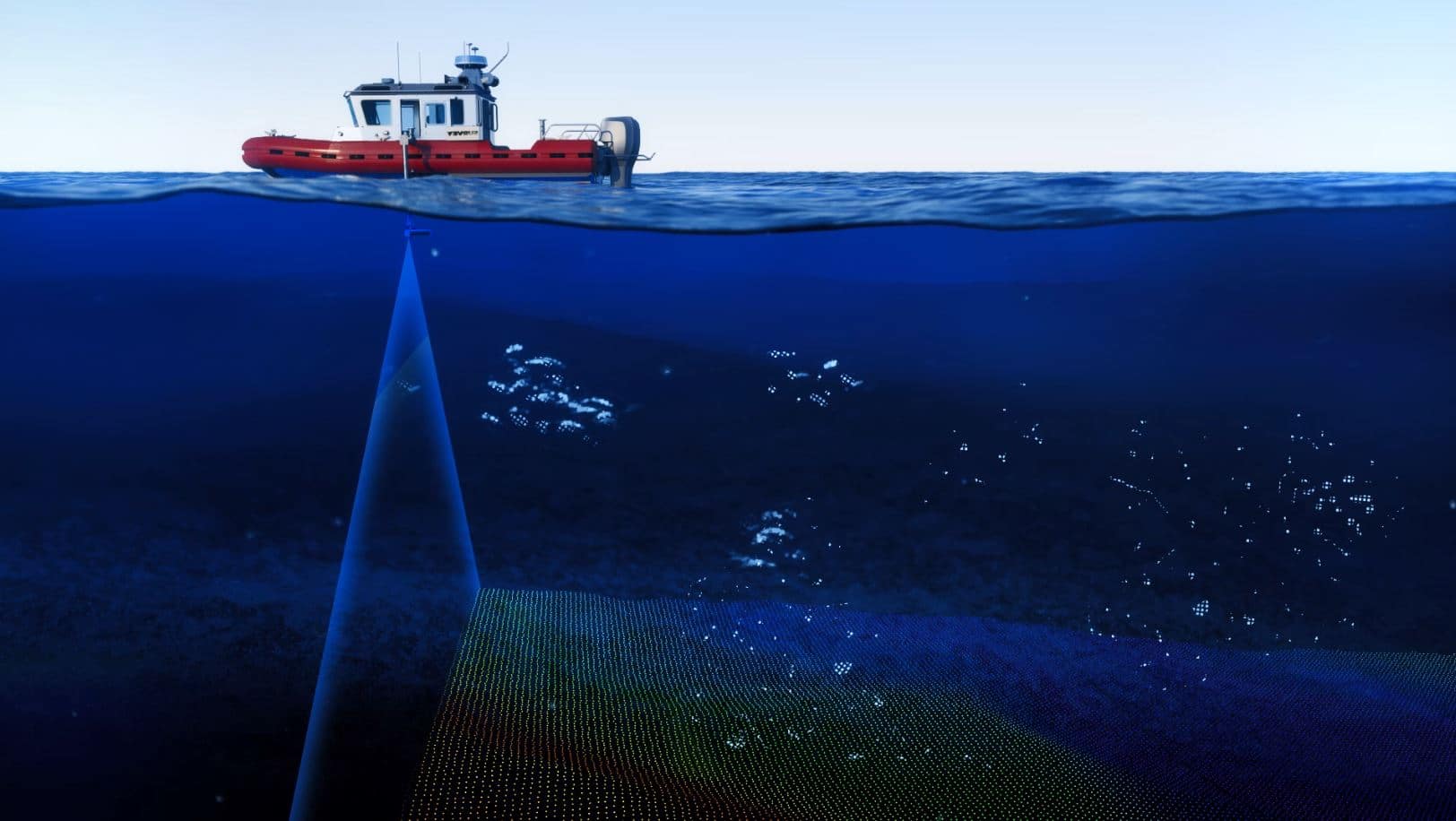
Multibeam echo sounders are advanced sonar systems used on ships and underwater vehicles. They emit multiple sound waves (or beams) toward the ocean floor. When these sound waves hit the seabed, they bounce back to the receiver. By measuring the time it takes for the echoes to return, scientists can calculate water depth and create highly detailed maps of underwater terrain.
Unlike traditional single-beam sonar, which only measures depth at one point directly beneath a vessel, multibeam systems capture a wide swath of the seafloor at once. This allows for faster and more accurate mapping.
The Role of Multibeam Echo Sounders in Ocean Exploration
The Role of Multibeam Echo Sounders in Ocean Exploration is especially important in modern marine science because it enables researchers to visualize underwater landscapes in remarkable detail. These systems help identify underwater mountains, trenches, volcanoes, and even shipwrecks. Without this technology, large-scale mapping of the ocean floor would be extremely slow and incomplete.
Multibeam echo sounders also support deep-sea research missions. Scientists use them to explore previously unknown regions of the ocean, revealing new geological formations and ecosystems. This data is crucial for understanding plate tectonics, underwater earthquakes, and volcanic activity.
Applications in Marine Science and Industry
One of the key contributions of The Role of Multibeam Echo Sounders in Ocean Exploration is in environmental and ecological studies. Marine biologists use seabed maps created by these systems to locate coral reefs, fish habitats, and other sensitive ecosystems. This helps in conservation planning and marine protected area design.
In addition, the technology is widely used in commercial and industrial sectors. Offshore oil and gas companies rely on multibeam mapping to plan safe drilling operations. Similarly, undersea cable companies use it to design routes for communication cables that connect continents.
Advantages Over Traditional Mapping Methods
Multibeam echo sounders offer several advantages over older surveying techniques. First, they provide much higher resolution data, allowing scientists to see fine details of the seafloor. Second, they cover large areas quickly, making ocean mapping more efficient. Third, they reduce uncertainty by producing overlapping sound beams that create a complete 3D model of underwater terrain.
Because of these advantages, The Role of Multibeam Echo Sounders in Ocean Exploration has become increasingly significant in both academic research and practical applications.
Challenges and Limitations
Despite their benefits, multibeam echo sounders are not without limitations. Deep-sea operations require expensive equipment and specialized vessels. Data processing is also complex, as raw sonar data must be cleaned and interpreted using advanced software.
Environmental conditions such as water temperature, salinity, and seabed composition can also affect accuracy. Researchers must carefully calibrate instruments to ensure reliable results.
Future of Ocean Mapping Technology
The future of ocean exploration is closely tied to advancements in sonar and digital mapping technologies. Artificial intelligence and machine learning are increasingly being used to process multibeam data more efficiently. Autonomous underwater vehicles (AUVs) equipped with these systems are also expanding the reach of deep-sea exploration.
As technology continues to improve, The Role of Multibeam Echo Sounders in Ocean Exploration will become even more critical. These systems will help fill the remaining gaps in our understanding of the ocean floor and contribute to discoveries that could reshape marine science.
Conclusion
Multibeam echo sounders have revolutionized the way we study the oceans. By providing detailed and accurate maps of the seafloor, they support scientific research, environmental protection, and industrial development. Ultimately, The Role of Multibeam Echo Sounders in Ocean Exploration is fundamental to unlocking the mysteries of the deep sea and advancing our knowledge of the planet’s last great frontier.
